LinkedIn, But NoFollow Link Love
We all knew it was only a matter of time, but still secretly hoped that the honeymoon would last forever. It does appear that LinkedIn has started nofollowing public profile links…but with a strange twist.
I’ve been so heads down in client audits that I didn’t discover this until, ironically, doing another audit for another client. However, I also don’t recall seeing many blog headlines in my Netvibes, so perhaps this one has rather floated under the radar a bit. Even a quick scan in Google doesn’t turn up much beyond this post, ‘Linkedin adds rel=”Nofollow” to profile links‘ over at Kingpin SEO, which dates this change around early-mid November. Based on my recent audit schedule, would make this about right.
Possible Related Posts
Posted by Brian R. Brown of Netconcepts on 12/08/2009
Permalink | |  Print
| Trackback | Comments (0) | Comments RSS
Print
| Trackback | Comments (0) | Comments RSS
Filed under: Link Building, Social Media Optimization Link Building, linkedin, nofollow, Social-Media
Podcasts of Neil Patel, Eric Ward, and Vanessa Fox
I’ve been interviewing speakers of the AMA’s Hot Topic: Search Engine Marketing events taking place April 20th in San Francisco, May 25th in NYC, and June 22 in Chicago (all three of which I will be chairing). I had fascinating and insightful conversations with link builder extraordinaire Eric Ward, Googler Vanessa Fox, and social media marketing guru Neil Patel. There’s some real gold in those interviews.
Download/Listen:
- Neil Patel interview (15 minute MP3, 3 megs) – getting to the front page of Digg and other social media sites
- Eric Ward interview (36 minute MP3, 8 megs) – tips and secrets on how to garner links
- Vanessa Fox interview (40 minute MP3, 9 megs) – Google’s webmaster tools, SEO impacts of AJAX, Flash, duplicate content, redirects, etc.
More podcasts to come from other speakers, so be sure to subscribe to the RSS feed so you don’t miss them. Also be sure to register for the conference at one of the three cities, it’ll be great!
Possible Related Posts
Posted by stephan of stephan on 03/28/2007
Permalink | | Print
| Trackback | Comments Off on Podcasts of Neil Patel, Eric Ward, and Vanessa Fox | Comments RSS
Filed under: Google, Link Building, SEO, Site Structure, Social Media Optimization digg, Google, Link Building, link-baiting, podcasts, Social Media Optimization, social-media-marketing, Webmaster-Central
Blog Tag – You’re It!
Okay, so, I’m late to the Blogtag game, but better late than never, right? I’m not sure who came up with this, but the idea behind the game is that you have to tell 5 things about yourself that most of your readers might not know, and then “tag” five other bloggers by linking to them. Stephan tagged me back around Christmas timeframe, and I was so busy vacationing, and then getting back into work-groove that I neglected to play out my piece in this cool little SEO meme. So, here goes.
Five Things You Didn’t Know About Me:
1. – I’m fascinated by the Voynich Manuscript. It’s compelling to me as an enduring mystery — likely one of the top seven mysteries in the modern world. Many cryptographers and linguists have attempted to decode it, and failed!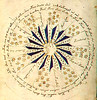 If I thought it was more than an antique hoax, I’d be writing my own Perl scripts to try to break the code down. My first decoding book was written by Martin Gardner, and I used what I learned from it in third grade to break a coded message I found in my great-great-grandmother’s autograph book. I guess the takeaway is that I’m just damn compelled by puzzles. I used to compete with people in high school to see who was the fastest at solving mixed-up Rubik’s Cubes. I think my record was right around 42 seconds. (I’m not that fast anymore, but I’m obviously still a geek.)
Possible Related Posts
Posted by Chris of Silvery on 02/16/2007
Permalink | | Print
| Trackback | Comments Off on Blog Tag – You’re It! | Comments RSS
Filed under: Blog Optimization, General, Link Building blog-tag, Link Building, linkbait, Links
Leveraging Wikipedia for SEO: it’s no longer about the link juice
Recently when I blogged about the SEO benefits of contributing to Wikipedia, I alluded to some of the complex strategies and tactics around creating entries, keeping your edits from getting reverted, etc.
One of the benefits that can no longer be gained is link juice. That’s because rel=nofollow has just been instituted across all of Wikipedia and its sister sites (such as Wikinews).
Does that mean you no longer need to concern yourself with Wikipedia? Heck no! It is still a valuable source of traffic and, just as importantly, credibility. To have a Wikipedia entry for your company show up in the top 10 in Google for your company name gives a nice credibility boost. Even better if the coverage on your entry is favorable!
Wikipedia is still key to the discipline of “reputation management.” By understanding the ins and outs of Wikipedia — navigating the landmines of notability criteria, not contributing your company’s entry yourself, disambiguation pages, redirects, User pages, Talk pages, etc. — you can potentially influence what is said about you on Wikipedia. Furthermore, if web pages that are critical of your company occupy spots in the first page of the SERPs, you can push them out and replace them with your Wikipedia entries. Because Wikipedia holds so much authority and TrustRank, it’s easy to get an entry into the top 10 for any keyword.
Back to the nofollowing of external links… I don’t think SEOs will leave Wikipedia any time soon due to this new development. Even though that was Jimbo Wales’ hope.
There is still significant incentive for SEOs to edit (and manipulate) Wikipedia so long as Wikipedia holds the top spot for important keywords such as “marketing” in Google.
Possible Related Posts
Posted by stephan of stephan on 01/23/2007
Permalink | | Print
| Trackback | Comments Off on Leveraging Wikipedia for SEO: it’s no longer about the link juice | Comments RSS
Filed under: Link Building, PageRank Link Building, link-gain, PageRank, reputation-management, TrustRank, Wikipedia
Fishing for “link love” with “link bait”
Yum…. Link Bait.
I agree with Eric Ward: the phrase “link bait” just sounds UGLY.
But the technique works. Who can resist linking to the uproariously funny “The top 10 unintentionally worst company URLs“. Apparently I can’t, because I just did!
One of my favorite “link bait” morsels of late has been this how-to post about link baiting, by the inimitable Rand Fishkin. Go and gobble it up!
Possible Related Posts
Posted by stephan of stephan on 07/30/2006
Permalink | | Print
| Trackback | Comments Off on Fishing for “link love” with “link bait” | Comments RSS
Filed under: Link Building Link Building, link-bait, Links

